




The Intelligence Mirage: Why a War with Iran Would Be Another Iraq
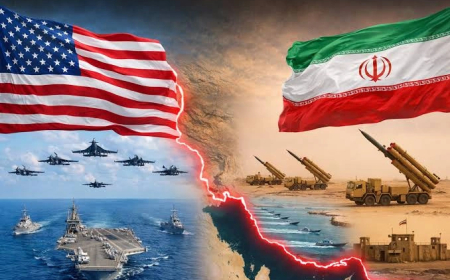
Twenty years after Colin Powell, then U.S. Secretary of State, stood at the United Nations and told a lie as "proof" of Iraq's weapons of mass destruction, Washington is once again on the brink of repeating the same strategic mistake. This time, Iran is the target, but the signs are familiar: unsubstantiated intelligence, fed by regional actors and amplified by war lobbies in Congress, alongside promises of a "short and easy war"—a war whose real cost will be borne not by America's allies, but by American taxpayers and the families of its soldiers. If we have forgotten the lesson of Iraq, history is doomed to repeat itself.
Twenty years after Colin Powell, then U.S. Secretary of State, told a lie about "weapons of mass destruction" at the United Nations, Washington is once again on the verge of repeating the same strategic error. Iran is the target this time, but the symptoms are familiar: evidence-free intelligence, threat inflation by war lobbies on Capitol Hill, and the promise of a "short and easy war" to be paid for with American blood and taxes—not with diplomacy.
The core problem is that pre-war storytelling—the very pattern that dragged America into the Iraqi quagmire—is taking shape once again. The only difference is that this time, regional actors with clear motives (from Tel Aviv to Riyadh) and their representatives in Washington are feeding misinformation with greater skill. If Congress and the mainstream media are not careful, the United States will enter a war for the second time in the 21st century built not on national interest, but on unverified narratives and hollow promises.
The Lesson of Iraq: When Intelligence Becomes a Weapon of War
Nearly all independent analysts today agree that the 2003 invasion of Iraq was based on three unproven claims: Saddam's imminent atomic bomb, his ties to al-Qaeda, and the notion that Iraqis would welcome American forces as "liberators." What was the cost of these strategic lies for America? 4,500 dead, 32,000 wounded, and a low-end estimate of $3 trillion (according to a Brown University report). But the opportunity cost—what that money could have been spent on for infrastructure, healthcare, or trade competition with other nations—is incalculable.
The pattern is always the same: 1) exaggerating an immediate, existential threat; 2) presenting selective intelligence with no independent source; 3) suppressing dissenting voices in government and media; and 4) selling the war as a "quick, low-cost operation." In the case of Iran, we are witnessing the exact reconstruction of this pattern today.
The Role of Regional Actors: Misinformation from Tel Aviv to Washington
Let's be clear: The Netanyahu government has, over two decades, made multiple intelligence claims about Iran that were later refuted by U.S. intelligence agencies or the International Atomic Energy Agency. From the 1992 claim of "one year to the bomb" to the "stolen nuclear documents" of 2018, whose primary goal was to influence Trump's decision to withdraw from the JCPOA. In many of these cases, Israel provided data to its American counterparts that was later deemed "selective" or even "reconstructed."
But the problem is not limited to Israel. Powerful war lobbies in Washington—from AIPAC to defense foundations that feed off the military-industrial complex—bring the narrative of an "imminent Iranian threat" to the halls of Capitol Hill with massive budgets. They trade each senator's vote for a war resolution with public endorsements in the media and from "experts." The result: an atmosphere where anyone who points out the costs of war is labeled "against the interests of the American people."
Three Strategic Lies of Today That Mirror 2003
Let us examine three concrete examples of misinformation currently circulating in the media:
1. "Iran is on the verge of building a bomb."
This claim has been repeated by Israeli officials at least seven times from 1992 to the present. The latest reports from the International Atomic Energy Agency (late 2023) indicate that Iran has no active weapons program. Even the 2018 U.S. withdrawal from the JCPOA was based on "documents" whose authenticity even the Trump administration could not later prove.
2. "Limited strikes will end the war without heavy casualties."
They said the same thing in Iraq: a 30-day "liberation operation" lasted six years. Iran has the capability for asymmetric warfare. A war with Iran means setting all U.S. bases in the Middle East on fire, halting oil tankers in the Strait of Hormuz, and costing the U.S. economy tens of trillions of dollars.
3. "The region will be safer after the war."
Twenty years of war in Iraq and Afghanistan have shown us that militarism has not made the Middle East safer, but more unstable. An attack on Iran will deepen the strategic alliance between China and Russia and will train thousands of new fighters for resistance groups.
The War Lobby and the Media: Repeating the 2003 Show
In the fall of 2002, no major American media outlet was willing to publish an independent report on the claims of Iraq's WMDs. The New York Times and The Washington Post ran articles citing "anonymous intelligence sources" that were later revealed to have been fed by the same interventionist group (PNAC). Today, the same pattern is taking shape: every week in The Wall Street Journal or on Fox News, "informed officials" speak of the latest "imminent Iranian threat" without providing a single independent document.
The big difference is this: in 2003, the counter flow of intelligence was very weak. Today, documentation tools and multiple intelligence agencies exist that could expose the lies earlier. But is anyone listening? When the war lobby's engine, with its $100 million budget, is running in Congress, reality has little chance.
America's Interest Is Not in Repeating the Mistake
The final point is this: even if we assume, for the sake of argument, that 100% of the intelligence provided by Israel and other regional actors is correct (which it is not), one question remains unanswered: Is a war that costs thousands of billions of dollars from American taxpayers' pockets and sheds the blood of American soldiers in the best interest of the American people? The answer from two decades of endless wars in the Middle East is a resounding "no."
The American people expect their president and Congress to ask one simple question before any decision for war: "What is the tangible benefit to America in this war?" Not the interests of Israel, not the interests of Saudi Arabia, not the interests of arms companies. Americans are tired of paying the price for others' intelligence failures.
If Washington does not want to re-enact the tragedy of Iraq with a new poster (Iran), it is time to stop the war engine. Let diplomacy replace the next intelligence mirage. More than anything else, the American people need engagement with the world that serves the economic interests of American families—not wars sold by lies.