






A Clear Message to Washington: Tehran Transitions from Defensive Posture to Proactive Strikes
The Chief of Staff of the Armed Forces announced a fundamental revision of the Islamic Republic of Iran’s defense doctrine. This strategic pivot, reportedly spurred by recent escalating tensions and provocative actions by the U.S. and the Zionist regime, moves Iran away from a purely ‘Deterrent Defense’ posture towards a strategy of ‘Proactive and Pre-emptive Offense.’ Under this new framework, not only a concrete attack but also “tangible signs of a threat” can legitimize a swift, decisive, and wide-ranging Iranian military response.
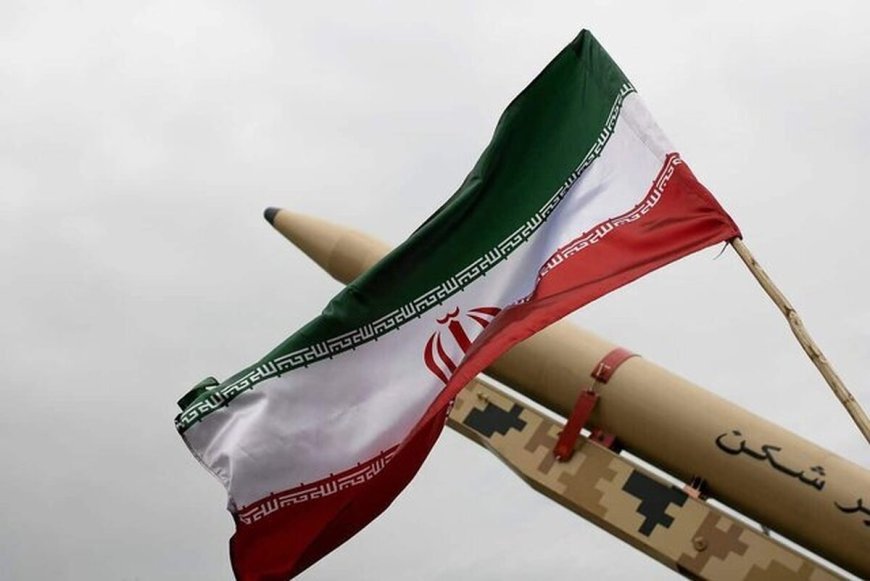
In a development poised to fundamentally reshape regional security dynamics, a top Iranian military commander has confirmed a paradigm shift in the country’s defense strategy. Major General Seyed Abdolrahim Mousavi, the Chief of Staff of the Armed Forces, revealed during an operational unit inspection that the doctrine has evolved from the traditional ‘Deterrent Defense Based on Strategic Patience’ to an approach centered on ‘Active and Pre-emptive Offense.’
This change, citing continued “insidious U.S.-Zionist actions” following a recent military confrontation (referred to internally as the “12-Day War”), grants the Armed Forces authorization to proactively disrupt enemy calculations.
From Patience to a Blitzkrieg Response
For the past four decades, Iran’s defense doctrine has primarily focused on avoiding the initiation of war, achieving deterrence through reciprocal threat and raising the cost of aggression. However, the latest statements, aligning with a recent Supreme National Security Council Secretariat declaration, signal a departure. The new rationale asserts that the legitimacy for military action now extends beyond an attack already executed; even “tangible indicators of a threat” can now justify intervention.
General Mousavi outlined the core components of this new doctrine:
Offense as Prevention: Offensive action is no longer merely a response but a tool for proactively neutralizing threats before they materialize.
Lightning Operations: Emphasis on speed and swiftness to avoid protracted, attritional conflicts.
Wide-Ranging Scope: Military responses will not be geographically confined but can be executed simultaneously across multiple domains and jurisdictions.
Asymmetric and Crushing Strategies: Utilizing a synchronized mix of diverse tools—missiles, drones, cyber capabilities, and intelligence assets—to ensure unpredictability and overwhelm adversary calculations.
A Direct Warning to Extra-Regional Powers
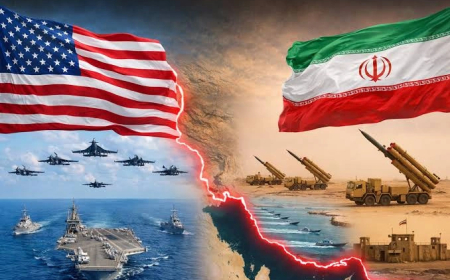
This strategic evolution is a direct response to recent U.S. military escalations in the region, including the deployment of aircraft carriers and increasingly explicit threats from American officials. Tehran now interprets these maneuvers not as mere displays of force, but as “tangible signs of threat” that activate the pre-emptive doctrine.
This posture is underscored by the Supreme Leader’s explicit warning that “If you start a war, it will be a regional war.” This declaration serves as the strategic framework for the new defense plan, signaling that any conflict will rapidly expand beyond the initial point of contact.
Crucially, Iranian officials stress that this shift is not an embrace of militarism but a calculated effort to reduce the probability of war by drastically increasing the cost of any miscalculation by adversaries. Iran is moving into a phase of Active Deterrence, refusing to wait for the first strike. In simple terms: if an attack is perceived as imminent, the doctrine dictates not waiting to be hit first. Regional actors relying on U.S. military presence must now calculate the inherent risk of being inadvertently drawn into a conflict beyond their control.