




When Envoys Replace Diplomats in U.S. Foreign Policy
U.S. foreign policy is moving away from formal institutions toward personal, deal-driven relationships, sidelining professional diplomats.
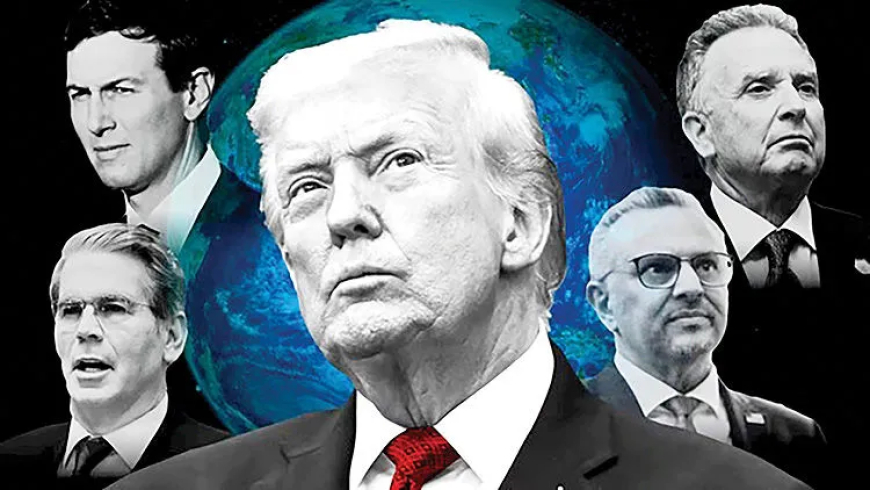
Decision-making authority in U.S. foreign policy is undergoing a fundamental shift—one in which the influence of formal institutions and classical diplomatic processes has diminished, giving way to personal interactions and what can be described as “deal-making through envoys.” The signs of this transformation have become especially clear during Donald Trump’s second presidential term, pointing to Washington’s entry into a new phase of international relations—an era that can be called the “age of power-broker diplomacy.”
For decades, U.S. foreign policy was largely shaped by institutional frameworks and expert analysis. The State Department, the National Security Council, and professional diplomats stood at the center of decision-making, with policies formulated through established and formal channels. That model, however, has now changed. Today, influencing Washington depends less on traditional diplomatic mechanisms and more on access to a handful of figures close to the president.
According to the Financial Times, Brian Mast, a Republican member of Congress and a figure closely tied to what is known as Trump’s “second unofficial White House” in South Florida, exemplifies this shift. His Washington office hosts daily delegations from embassies and capitals around the world—from Nigeria and Turkey to Azerbaijan and Taiwan. The purpose of these visits is clear: negotiating with the United States over concessions and resources they can offer. Describing the trend, Mast says: “Everyone comes in and says they have the highest-quality version of a mineral or the capacity to refine it.” He adds with a laugh: “This is what’s in fashion now; everyone brings this briefcase with them.”
Two defining features now stand out in U.S. foreign policy under this model: “deal-centered diplomacy” and “envoy-centered diplomacy.” Negotiations no longer revolve around long-term commitments or traditional diplomatic initiatives, but instead focus on what the other side can deliver to the United States. Talks are treated as tools for extracting resources and concessions, with immediate economic and political gains taking priority. At the same time, individuals close to the president have assumed decisive roles, shaping outcomes outside the State Department and traditional institutions.
As a result, there has been a notable shift in who conducts American diplomacy. Rather than navigating the State Department’s formal hierarchy, figures close to Trump have stepped directly into key roles. Steve Witkoff, a real estate investor and longtime friend of the president, serves as a special envoy in peace negotiations across various regions. Jared Kushner, Trump’s son-in-law, despite holding no formal government position, plays a significant role in talks related to the Middle East and Ukraine. Tom Barrack, U.S. ambassador to Turkey and a major donor to Trump’s campaign, is active in mediation efforts involving Syria and Lebanon. Meanwhile, Massad Boulos—father-in-law of Trump’s daughter Tiffany and a businessman with experience in West Africa—has effectively become Trump’s informal representative on African affairs.
A former U.S. official who has served under multiple administrations describes the situation this way: “Traditional channels of consultation, oversight, and hierarchical policy engagement have effectively been set aside. Today, professional diplomats and subject-matter experts no longer play the central role, and the number of people who truly have influence has sharply declined.” Mouaz Moustafa, executive director of the Syrian Emergency Task Force, echoes this assessment, noting that if someone is a longtime friend of Trump, they sit at the core of decision-making—while even the secretary of state and the vice president rank a step below.
One consequence of this shift has been reduced access to senior officials in the new U.S. administration. South Korean negotiators, for example, were forced to undertake exhausting 30-hour trips to Washington in order to secure direct talks with Trump. A Japanese diplomat says: “At first, think tanks and lobbyists claimed they had close access, but it quickly became clear that these connections were either cut off or never existed at all.” By contrast, countries more compatible with Trump’s blend of personal, political, and economic diplomacy have adapted more quickly. This group includes Gulf states as well as some countries in Asia and Latin America. As one Southeast Asian official puts it: “Access channels have narrowed, but relying on personal relationships is not unfamiliar to us.”
In this environment, gifts and commercial incentives have become key instruments of foreign policy—from luxury watches and tariff reductions to investment opportunities and access to mineral resources. A European foreign minister summarizes the current reality this way: “Everything is conditional. If you don’t put something on the table, you get nothing in return.”
Supporters of the Trump administration argue that this approach ultimately benefits the American public by reducing debt and securing critical resources such as energy and minerals. Critics, however, warn that sidelining formal processes and concentrating power in the hands of a few individuals increases the risk of entangling personal commercial interests with foreign policy. Democratic Senator Cory Booker has said he is surprised by the way foreign officials now factor the president’s business interests into negotiations.
For America’s traditional allies—long accustomed to formal diplomatic channels—the new landscape has proven challenging. To remain influential, they must now cultivate personal ties with the president’s inner circle. Argentine President Javier Milei has managed to gain access by consistently attending conservative conferences and building personal relationships. Even the connection between Argentina’s deputy economy minister and U.S. Treasury Secretary Scott Bessent has played a crucial role in securing Washington’s financial backing for Buenos Aires.
Ultimately, as Brian Mast explains, the Trump administration’s strategic logic is simple but decisive: “What do we want from a country or a region? What do they want from us? If we give something, do we get what we want? If not, we go back to the negotiating table.” This perspective underscores how U.S. foreign policy has moved away from complex diplomatic analysis toward rapid assessments of interest, personal connections, and direct deal-making with key individuals—a clear sign that Washington has entered the era of “negotiating through envoys.”